Adm Electricity will illuminate the Fethiye coastline with “red lights”
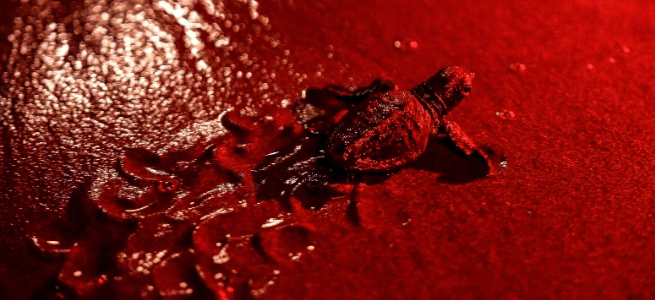
Adm Electricity, which manages the electricity distribution infrastructure in Aydın, Denizli, and Muğla under the Aydem Enerji umbrella, will illuminate the Fethiye coastline with “red lights” to protect the natural life cycle of sea turtles.
Commenting on the project, Adm Electricity General Manager Emrah Kalkan said, “Within the scope of this project, which we are carrying out with a commitment to acting in harmony with nature, we are converting streetlights to red lights. Sea turtles that cannot perceive red light shall be able to head toward the sea rather than the city, and make it back to the sea safely.”
Population growth is increasing pressure on wildlife, particularly in coastal regions during the summer months. The accelerating pace of urbanization and the effects of technological transformation are making biodiversity conservation practices increasingly important with each passing day. In this context, initiatives that support the sustainability of coastal ecosystems and practices that safeguard wildlife are of critical importance.
Adm Electricity, the electricity distribution company serving Aydın, Denizli, and Muğla, is implementing a significant project to protect and safeguard the natural habitats of sea turtles based on this understanding. Having carried out the pilot phase in 2025 at Karaot Beach in the Fethiye district of Muğla, Adm is now expanding the project to the Kocaçalış Beach area in Fethiye. The project, jointly undertaken and carried out by Pamukkale University and Adm, shall contribute to the conservation efforts that the Ministry of Environment, Urbanization, and Climate Change of the Republic of Türkiye has been implementing for many years under the leadership of academics.
Under the guidance of Dr. Doğan Sözbilen, a Sea Turtle Expert and Lecturer at Pamukkale University, and with the support of Aydem Energy and the leadership of Adm Electricity, a project has been launched to convert streetlights to red light for sea turtles that are adversely affected by city lights during their nesting season. Since sea turtles cannot perceive red light, they will thus be able to nest safely, and the hatchlings shall be able to make their way toward the sea and reach the water. This initiative, implemented on the beaches of Fethiye, serves as an important example of how human activities and natural life can coexist in harmony.
Dr. Doğan Sözbilen: “The project in Fethiye is a first and a pioneering initiative in Türkiye”
Sözbilen, noting that the Fethiye coastline is among the most important nesting areas for sea turtles in Türkiye, highlighted the scientific importance of the project, stating, "The beaches of Fethiye, are an area where monitoring and conservation efforts have been carried out continuously for the longest period by the Directorate General of Nature Conservation under the Ministry of Environment, Urbanization, and Climate Change of the Republic of Türkiye. At the same time, it is a densely populated touristic region where the city and the nesting beach are intertwined. Sea turtles, as species older than dinosaurs, continue to survive today thanks to the adaptations they have acquired over millions of years of evolution. However, artificial lighting—a reflection of increasing human pressure in coastal areas, particularly white and bright lights—can adversely affect both the nesting behavior of adult females and the hatchlings’ orientation towards the sea. Scientific studies have shown that red light has a much lower impact on sea turtles. For this reason, the use of red light has come to the forefront in recent years as a conservation practice being promoted worldwide. This project, which we have implemented with Adm Electricity, is a first in Türkiye.”
“Artificial lights pose a threat.”
Sözbilen, noting that hatchlings find their way to the water by following the natural light of the sea after hatching, emphasized that artificial lights pose a significant threat, and said, “Thanks to this initiative at Kocaçalış Beach, sea turtles will be able to nest freely in the very place where they were born. While there has been an upward trend in the number of nests across the Mediterranean, no significant change has been observed in Fethiye over the past 30 years. For this reason, any measures taken are of critical importance. Sea turtles are creatures that return to the very beaches where they were born years later to nest. We must continue to protect these beaches in the future so that the hatchlings we are protecting today can find healthy nesting areas approximately 20 years from now.”
Emrah Kalkan: “We aim to expand the project throughout our region.”
Emrah Kalkan, General Manager of Adm Electricity, commented on the project, saying, “As we implement environmental and social projects in our region—which covers the provinces of Aydın, Denizli, and Muğla—our most important criterion is that the project be sustainable. In line with our corporate core value of ‘Touching Lives,’ we continue to protect the future of our world and implement projects that benefit all living beings in our operating region. The most important nesting areas for sea turtles, which are of great importance to the ecosystem, are located in our region. We are therefore converting streetlights to red lights. This way, sea turtles can reach the sea comfortably, and lighting remains uninterrupted for our customers. We aim to expand this project throughout our region.”
The first scientific data will be available in September.
The sea turtle breeding season begins in May and ends in late September. After an incubation period of approximately 45–60 days, the hatchlings are expected to reach the sea starting from mid-July onwards. Females typically lay eggs every 2–3 years and can build several nests in a single season. A single nest usually contains 50–100 eggs. During this process, the nesting behaviors of female sea turtles, the number of nests, and the hatchlings’ success rate in reaching the sea are systematically monitored. Since it takes 20–25 years for the sea turtles to reach maturity, no dramatic change in the number of nests is expected in the initial phase. The first findings from these studies, which are expected to be conducted regularly every year, are planned to be evaluated and reported in September. The impact assessment of the project will be monitored through follow-up studies in the coming years.